
Flower meanings
The Complete Guide to Flower Meanings: What Every Bouquet Really Says
/8 min read
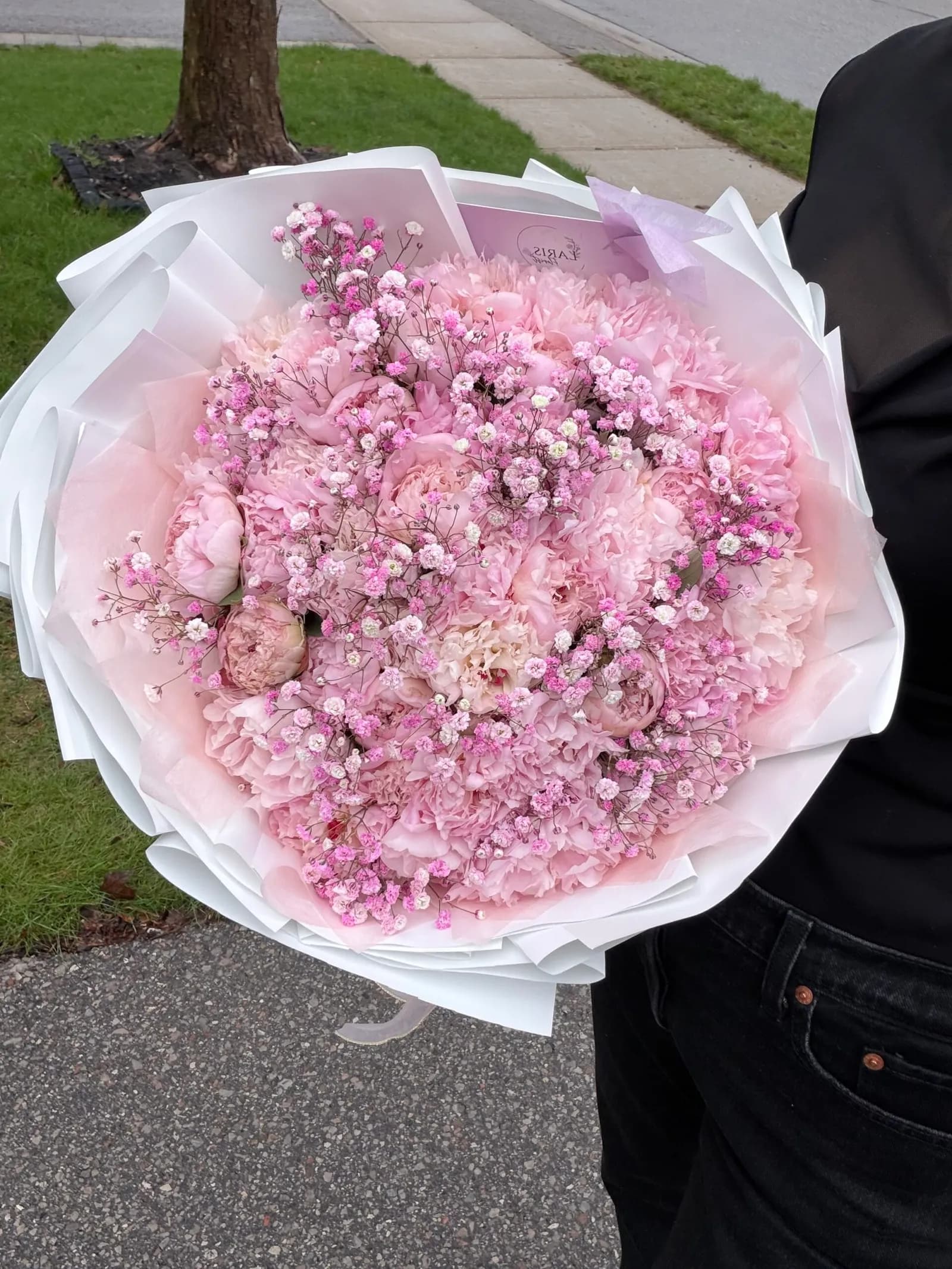
This guide to flower meanings covers the flowers people send most, what each one has traditionally stood for, and how colour changes the message. Most people don't need a full Victorian dictionary. They need to know that yellow roses read as friendship rather than romance, that white lilies lean toward sympathy, and that a striped carnation once meant "sorry, I can't." At Laris Florist we design every order by hand in our studio in Oak Ridges, at the north end of Richmond Hill, and deliver across York Region and Toronto, so we think about these things more than is probably healthy.
Use what follows as a guide, not a rulebook. Meanings shift from one tradition to the next, and the person getting the flowers usually cares more that you remembered their favourite colour.
Quick answer: what do flowers symbolize?
Roses mean love, but the colour decides which kind. Lilies stand for purity and are a traditional sympathy flower. Sunflowers mean happiness and loyalty. Tulips, red ones especially, are an old declaration of love. Orchids are linked with strength and luxury. On top of the flower itself, colour adds its own layer: red for passion, white for purity or remembrance, yellow for friendship, pink for thanks and admiration. Our opinion: most people read the colour of a bouquet before they think about what's in it, so if you only get one thing right, get the colour right.
Where flower meanings come from
Giving flowers a meaning is old, but the version most of us know comes from the Victorians. They called it floriography, and it let people say things through a bouquet that would have been awkward to say out loud. Dozens of flower dictionaries were printed in the 1800s, and they didn't always agree with each other, which tells you how fixed these meanings ever were.
We're a lot more direct now, but the symbolism stuck. It still shapes what people pick for weddings, funerals and anniversaries, and it's the reason a bunch of yellow roses on a first date can land a little oddly. Knowing the basics lets the flowers back up what you're trying to say instead of muddling it.
The meaning behind popular flowers
Roses: love, passion and beauty
Roses carry the most symbolism of any flower, and almost all of it depends on colour:
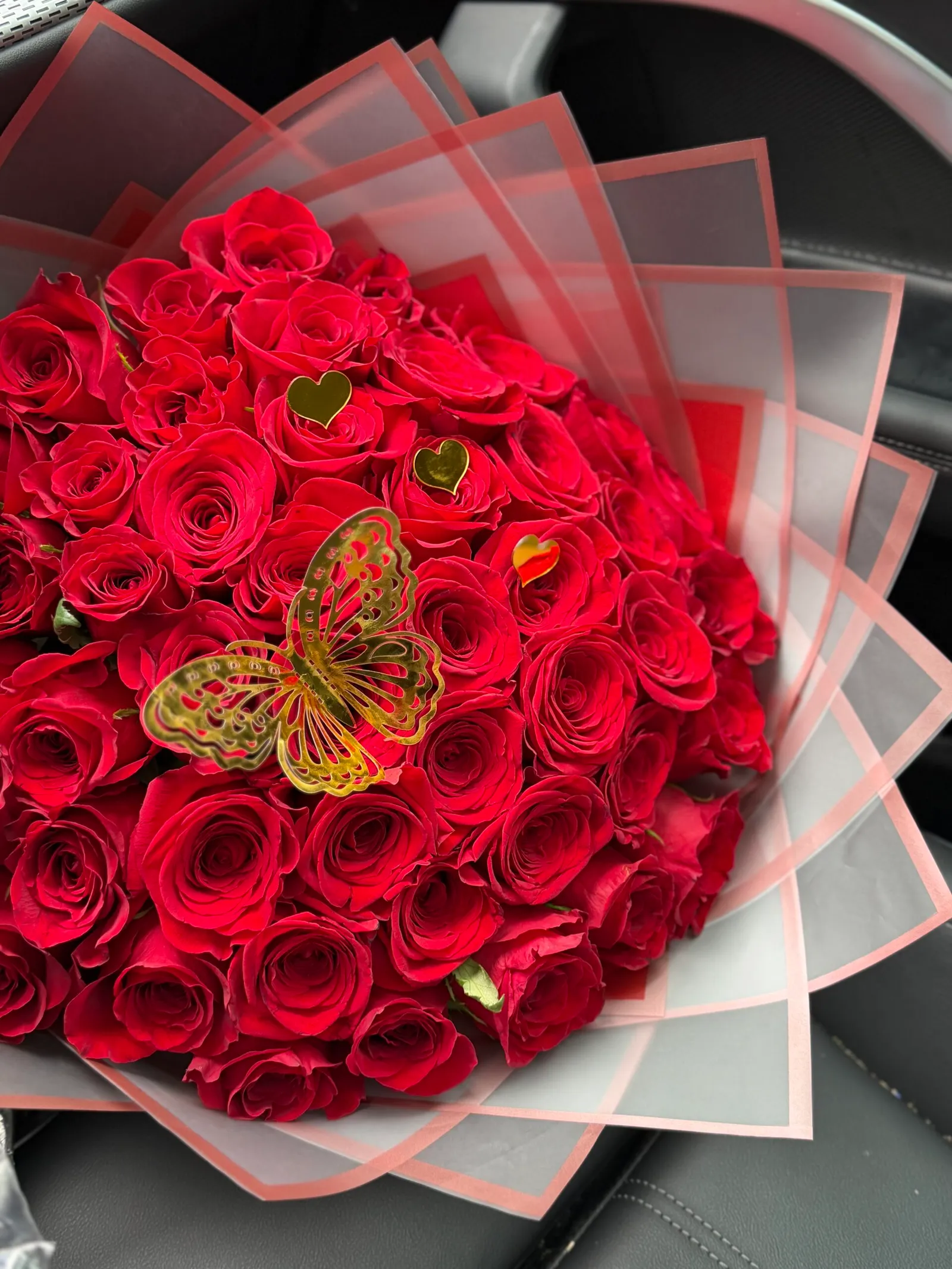
- Red roses: deep love and passion
- White roses: purity, new beginnings, and often remembrance
- Pink roses: gratitude, admiration and gentleness
- Yellow roses: friendship and joy
- Orange roses: enthusiasm and desire
- Lavender roses: love at first sight
A deep, dark red reads more serious than a bright red. Pink is the safe pick when you're not sure where things stand. You'll find the colours we have on the roses page, and our rose colour guide goes further.
Lilies: purity, sympathy and renewal
Lilies are tied to purity, and their message changes with the variety and colour:
- White lilies: purity and sympathy, and a long-standing funeral and memorial flower
- Stargazer lilies: ambition and encouragement
- Orange lilies: confidence and pride
- Yellow lilies: gratitude and joy
Two practical things. Oriental lilies have a strong scent that fills a small room fast, which some people love and some can't stand. And lilies are toxic to cats, pollen included. If the person you're sending to has a cat, mention it in the order notes and we'll design around it. Lilies are still one of the classic choices for sympathy flowers.
Sunflowers: happiness, loyalty and warmth
Sunflowers look exactly like what they mean: happiness, loyalty and adoration. They suit birthdays, get-well wishes and any day that needs cheering up. They're also thirsty, with heavy heads, so they want a sturdy vase and a top-up of water every day or two. Have a look at our sunflowers.
Tulips: perfect love and rebirth
Tulips are traditionally a sign of perfect or deep love, and in some traditions a red tulip counts as a stronger declaration than a red rose. Colour matters here too:
- Red tulips: true love
- Purple tulips: royalty and admiration
- Yellow tulips: cheerful thoughts
- White tulips: forgiveness and worthiness
They're a spring flower at heart, linked with renewal and fresh starts. Fair warning: tulips keep growing after they're cut and bend toward the light, so the shape of the bouquet will change over a few days. We think that's half the charm. See our tulips.
Orchids: strength, luxury and beauty
Orchids stand for strength, luxury and rare beauty. They last well, which is why they're a common choice for milestone gifts and offices. They also carry a sense of resilience, so they're often given to someone going through a hard stretch. A potted phalaenopsis can hold its flowers for weeks if it isn't overwatered.
Carnations: fascination and distinction
Carnations get underrated, but their meanings are some of the most specific:
- Red carnations: deep love and admiration
- Pink carnations: a mother's love, which is why they're tied to Mother's Day
- White carnations: pure love and good luck
- Striped carnations: regret, or "I wish I could be with you"
They're inexpensive and last a long time in a vase, often two weeks with fresh water, which makes them good everyday flowers.
Daisies: innocence and new beginnings
Daisies mean innocence, purity and new beginnings. They're simple and sincere rather than grand, which makes them a good fit for a new baby, a friend's fresh start, or a bouquet that shouldn't feel romantic.
Hydrangeas: gratitude and deep feeling
Hydrangeas stand for gratitude and sincere feeling, and their big, full heads make them a favourite for weddings and thank-you bouquets. They drink through their petals as well as their stems, so if one droops, submerge the whole head in cool water for half an hour. It usually comes back. Our hydrangeas are here.
What do different flower colours mean?
Colour does as much work as the flower itself:
- Red: love, passion, strong feeling
- White: purity, sympathy, new beginnings
- Yellow: friendship, joy, happiness
- Pink: admiration, gratitude, gentleness
- Purple: royalty and admiration
- Orange: enthusiasm, energy, warmth
- Blue: calm and trust, though true blue flowers are rare, and blue roses are always dyed (here's how tinted roses work)
Put flower and colour together and you can say two things at once. White roses with pink carnations, for example, reads as respect plus gratitude, which works well for a teacher or a mentor.
Choosing the right flowers for different occasions
Romantic gestures
Red roses are the classic. Red tulips, or a mix of red and pink, feel a bit softer and more personal for an anniversary or Valentine's Day. Our love and romance collection is the place to start.
Sympathy and funerals
White lilies, white roses and chrysanthemums are the traditional choices, standing for peace, purity and remembrance. Keep the colours quiet. See sympathy flowers.
Birthdays and celebrations
Sunflowers, bright daisies and mixed tulips bring the energy a birthday wants. Anything goes here, honestly. Start with birthday flowers.
New baby arrivals
Soft pink or white roses, daisies and pastel tulips all mean new beginnings. We'd skip heavily scented lilies for a newborn's room. Browse new baby flowers.
Get well soon
Sunflowers, yellow roses and other bright flowers lift a room during recovery. Some hospital wards don't allow flowers or strong scents, so check before sending there. See get well flowers.
Anniversaries
Red roses for lasting love are the obvious answer. Some couples follow the traditional flower for each anniversary year instead, which we cover in the best anniversary flowers by year. Or browse anniversary flowers.
Common flower meaning myths, debunked
Myth: colour doesn't change the meaning. It often changes it completely. A red rose and a yellow rose say very different things, and sending the wrong one to a new partner can be awkward.
Myth: nobody cares about flower meanings anymore. Hardly anyone uses floriography the way the Victorians did, but the meanings still steer weddings, funerals and romantic gifts, and plenty of people will look up what you sent them.
Myth: more flowers means a stronger message. A small bouquet in the right colours says more than a big one picked at random. A single stem on its own can carry plenty of meaning.
How we help you choose a bouquet
We design every order by hand from that day's flowers. If a stem isn't up to standard, we swap it for one of equal or higher value in the same colours, so the message of the bouquet stays the same. You can add a gift message at checkout and we tuck it in with the flowers.
If you want a bouquet to say something specific and you're not sure which flowers will do it, put it in the order notes or call us at (437) 291-5605 and we'll talk it through.
Frequently asked questions
What flower symbolizes love the most? The red rose is the best-known symbol of love and romance. In some traditions a red tulip is seen as an equally strong declaration.
What flowers are appropriate for a sympathy arrangement? White lilies, white roses and chrysanthemums are the traditional choices, standing for peace, purity and remembrance.
Do flower colours really change the meaning? Yes. The same flower can say different things depending on colour. A red rose means romantic love, while a yellow rose means friendship.
What is the meaning behind sunflowers? Sunflowers stand for happiness, loyalty and warmth, which is why people send them for birthdays and to cheer someone up.
Where can I order meaningful flower arrangements in the GTA? Laris Florist delivers across York Region and Toronto seven days a week from our studio in Oak Ridges. Order by 1 pm for same-day delivery to most postal codes. The delivery page has the details.