Seasonal
Seasonal Flower Guide: What Blooms Throughout the Year
/6 min read
Ask for peonies in January and you'll either be disappointed or pay a lot for flowers that have travelled halfway around the world. Flowers have seasons, just like strawberries, and this seasonal flower guide walks through what blooms throughout the year, so you know what to ask for and when. That's handy if you're planning a wedding, sending a gift or just want the freshest bunch for your money.
One of the questions we hear most at Laris Florist is some version of "what's actually in season right now?" We design every order by hand in our studio in Oak Ridges, at the north end of Richmond Hill, from that day's flowers, and deliver across Toronto and York Region. Below is what each season brings, why it affects quality and price, and how to make the most of whatever time of year it is.
Does seasonality actually make a difference?
Thanks to greenhouses and air freight, you can get most popular flowers most of the year. Roses, carnations and chrysanthemums barely notice the calendar. But flowers bought in their natural season still tend to come out ahead:
- They last longer. Flowers cut near their natural peak usually hold up better in the vase.
- They cost less. When a flower is plentiful, the price drops. Out-of-season stems carry the cost of growing them under lights or flying them in.
- They look fuller. Peonies in June are bigger and more fragrant than peonies in December.
- They suit the time of year. A bunch of tulips in April just feels right in a way a summer bouquet in February doesn't.
None of this makes out-of-season flowers off limits. It just helps to know when you're paying extra and why.
Spring: the season of renewal (March to May)
After an Ontario winter, spring flowers get a lot of attention. This is peak time for:
- Tulips: the signature spring flower, in almost every colour. They keep growing in the vase and bend toward the light, so expect a different shape by day three.
- Daffodils: among the first flowers up. Keep them in their own vase for a day before mixing, since their sap shortens the life of other flowers.
- Ranunculus: layers of thin, papery petals, a favourite for bouquets and weddings.
- Peonies (late spring): big, scented and only around for a few weeks, which is a large part of their appeal.
- Hyacinths: short, dense and very fragrant.
- Lilac: loved for its scent, though it doesn't last long once cut.
Spring arrangements lean toward pastels and fresh green. It's also one of the busiest stretches for florists across the GTA, with Mother's Day and the start of wedding season, so order early if you're planning ahead for either. From our range, tulips and peonies are the ones to look for in spring.
Summer: bold, abundant and fragrant (June to August)
Summer offers the most variety, with Ontario gardens in full swing. Popular summer flowers include:
- Sunflowers: big, cheerful and hard to mistake for anything else. Change their water often, since the thick stems cloud it quickly.
- Roses: available most of the year from greenhouses, but garden roses hit their natural peak in summer.
- Dahlias: layered petals in every colour, especially good in late summer.
- Hydrangeas: big, cloud-like heads that look good alone in a vase. They drink a lot, so top up the water every day.
- Zinnias: bright, sturdy and good in casual garden-style mixes.
- Lavender: used as much for its scent as its colour, often tucked into summer bouquets.
With so much available at once, summer usually brings more choice for the money. It's also the busiest wedding season in the GTA, so book early for anything large. Have a look at our sunflowers and hydrangeas in July and August.
Fall: warm tones and rich textures (September to November)
As the nights cool off, colours shift toward rust, burgundy, gold and plum. Fall's best flowers include:
- Chrysanthemums: the real workhorse of autumn, in warm colours, and known for lasting two weeks or more in a vase.
- Marigolds: orange and gold, very much a fall colour.
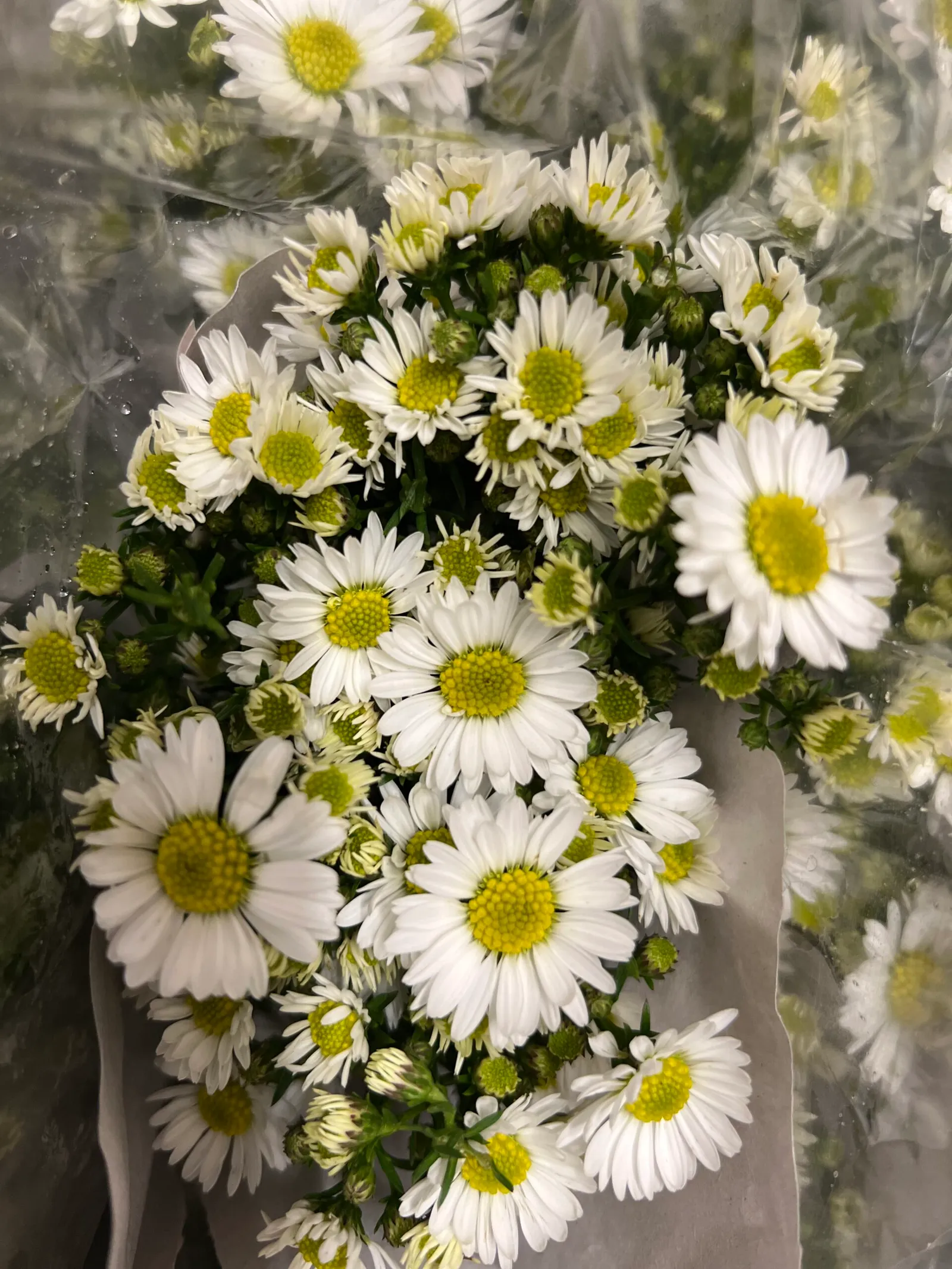
- Asters: small, star-shaped flowers in purple and blue that sit nicely next to fall leaves.
- Dahlias (late season): many varieties keep flowering until the first frost.
- Celosia: a fuzzy, flame-shaped flower that adds texture.
- Branches and foliage: bittersweet, coloured leaves and seed pods bring in texture beyond the flowers themselves.
Fall arrangements tend to have more texture than other seasons, mixing flowers with foliage, branches and pods. They're popular for Thanksgiving tables across the GTA, where a low arrangement beats a tall one so people can see each other across the turkey.
Winter: deep colours and evergreens (December to February)
Very little flowers outdoors in an Ontario winter, but winter arrangements are far from bare. This season leans on hardy flowers and evergreen accents:
- Amaryllis: big, trumpet-shaped flowers that have become a holiday classic.
- Poinsettias: the Christmas plant, in red and now white and pink too.
- Anemones: dark centres and papery petals, a lovely winter cut flower.
- Ranunculus (early varieties): some start showing up in the market before spring.
- Evergreens, pine and holly: they add texture and a festive feel when flower choices are thinner.
- Roses and other greenhouse flowers: many favourites stay available all winter. Roses and lilies are reliable choices in the coldest months.
Winter colours tend to run deep: burgundy, dark green and gold, paired with evergreen, especially around December.
Quick reference: what's in season when
| Season | Signature flowers | Colours |
|---|---|---|
| Spring | Tulips, daffodils, peonies, ranunculus | Pastels, fresh greens |
| Summer | Sunflowers, dahlias, garden roses, zinnias | Bright and warm |
| Fall | Chrysanthemums, marigolds, asters, celosia | Orange, gold, purple |
| Winter | Amaryllis, poinsettias, anemones, evergreens | Deep red, dark green, gold |
Choosing flowers for a GTA climate
Ontario's four seasons mean what's available shifts a lot through the year, even with greenhouses filling the gaps. A few practical tips if you're ordering in Toronto, Newmarket, Richmond Hill or Markham:
- Ask what's at its best right now instead of asking for a particular flower out of habit. An in-season swap is often better quality for the same price.
- Plan weddings and big events around the season where you can, especially if you love flowers with short windows, like peonies or dahlias.
- Mix one or two special stems with a seasonal base. A few out-of-season flowers go further when the rest of the bouquet is plentiful and well priced.
- Let the season set the colours. Rust and plum in October, pastels in April. Working with the season is easier than fighting it.
Also worth knowing: if a stem doesn't make the cut on the day, we swap it for one of equal or higher value in the same colours, so your bouquet still looks the way you chose it.
Local and imported flowers
Flowers grown closer to home spend less time in transit, which usually means a longer vase life, and buying local supports growers in the region. Ontario's growing season is short, though, so most florists here use a mix of local and imported flowers through the year. Neither is automatically better. What matters is how fresh the flowers are when they reach you.
Working with the season, rather than against it, almost always gives you a better result for the same money. If you're planning a bouquet, an event or a gift anywhere across Toronto or York Region and you're not sure what's good right now, call us at (437) 291-5605 and ask.
Frequently asked questions
What flowers are in season right now in Ontario? It depends on the month. Tulips and peonies lead in spring, sunflowers and dahlias in summer, chrysanthemums and asters in fall, and amaryllis and evergreens in winter.
Are seasonal flowers cheaper than out-of-season ones? Generally, yes. When a flower is plentiful and doesn't need long-distance shipping, it usually costs less.
Can I get any flower I want regardless of season? Many popular flowers, like roses, are available year-round from greenhouses. Seasonal ones like peonies and dahlias have short natural windows, so outside them they're harder to find and cost more.