

Blog
Why Seasonal Flowers Last Longer and Cost Less

Why Seasonal Flowers Last Longer and Cost Less
Seasonal flowers last longer and cost less because they are grown at the right time of year, travel shorter distances, and need far less energy, storage, and special handling. They arrive fresher, so they have more vase life left. Because supply is plentiful, the price drops. At Laris Florist, we build our arrangements around what is in season, so customers across Toronto, Newmarket, Richmond Hill, Markham, and the GTA get better flowers for less money.
If you have ever bought a bouquet that drooped after three days, you know how disappointing it is. And if you have ever paid a premium for roses in the middle of February, you may have wondered whether the price was really worth it.
Here is something we tell customers at Laris Florist every week: the flower you choose matters less than when you choose it. A tulip in April or a dahlia in September will almost always beat an out-of-season bloom on freshness, vase life, and price.
Let’s look at why, in plain terms.
What Are Seasonal Flowers?
Seasonal flowers are blooms harvested during their natural growing window, when weather, light, and temperature suit the plant. They are not forced to flower early or shipped across the world to meet demand.
In Ontario, that rhythm looks roughly like this:
- Spring (March to May): tulips, daffodils, hyacinths, lilacs, ranunculus
- Summer (June to August): peonies, sunflowers, delphinium, lavender, zinnias, garden roses
- Fall (September to November): dahlias, chrysanthemums, asters, celosia, dried grasses
- Winter (December to February): amaryllis, paperwhites, evergreens, hellebores, greenhouse tulips
Some flowers, like carnations and many roses, are available nearly year-round. But “available” and “in season” are two different things, and the difference shows up in your vase.
Reason 1: Seasonal Flowers Are Fresher When They Reach You
Freshness is the biggest factor in how long cut flowers last. A flower starts aging the moment it is cut, so every day spent in a truck, a plane, or a cold warehouse is a day taken off its vase life.
When flowers are in season locally, the journey is short. A bloom grown in southern Ontario can go from field or greenhouse to our workshop in a day or two. Out-of-season flowers often come from other continents. They are cut early, chilled, packed, flown, cleared through customs, stored, and trucked again before a florist ever sees them.
By the time those flowers reach a Toronto shop window, they may already be several days old.
A seasonal bouquet delivered in Markham or Richmond Hill simply has more life left in it. That is why a fresh peony in June can look spectacular for a week, while an imported one in winter may fade much sooner.
Reason 2: Flowers Grown in Their Natural Window Are Stronger
Plants grown in the conditions they are built for tend to be healthier. Tulips want cool spring weather. Sunflowers want long, hot summer days. Dahlias thrive in late-summer warmth and cooler fall nights.
When growers force a flower to bloom outside its natural season, they rely on heated greenhouses, artificial lighting, and controlled humidity. These methods work, but the stems can end up thinner or softer, and the blooms may have less stamina.
Seasonal flowers usually have:
- Thicker, sturdier stems that take up water more efficiently
- Better colour and fuller petals
- Stronger fragrance, since the plant is not under stress
- Fewer treatments needed to keep them looking good in transit
Put simply, a flower that is happy to be growing is a flower that tends to last.
Reason 3: Less Travel Means Less Stress on the Stems
Cut flowers are living things, and travel is hard on them. Temperature swings, long periods without water, and rough handling all shorten vase life.
Local and seasonal sourcing cuts down on all of that. Fewer handoffs means fewer chances for stems to be bruised or dehydrated. The cold chain, the system of keeping flowers cool from farm to florist, is also shorter and simpler.
For customers in the GTA, this is a real advantage. Our location means seasonal stems can reach our studio quickly, get conditioned properly, and go straight into your arrangement.
Reason 4: Why Seasonal Flowers Cost Less
Now to the second half of the promise. Price comes down to supply, demand, and cost of getting the product to you.
Supply is high. When a flower is in season, growers produce it in large volumes. More supply means lower wholesale prices. When peonies are at their peak in early summer, there are plenty to go around. In December, they are scarce, and the price reflects it.
Production costs are lower. Growing a flower outdoors or in a lightly managed greenhouse in its natural season costs far less than running heated, lit greenhouses to trick a plant into blooming early.
Shipping and storage costs drop. Long-haul air freight, refrigerated storage, and customs handling all add to the cost. Local seasonal flowers skip most of that.
Less waste means less markup. When flowers arrive fresh and last longer, florists lose fewer stems to spoilage. That helps keep prices fair for customers.
The result is simple. You get more flowers, better flowers, or both, for the same budget.
Real-Life Examples: Seasonal vs. Out of Season
Peonies in June vs. peonies in February. In early summer, peonies are lush and affordable. In midwinter, they are rare and imported, and the price can climb sharply. Same flower, very different value.
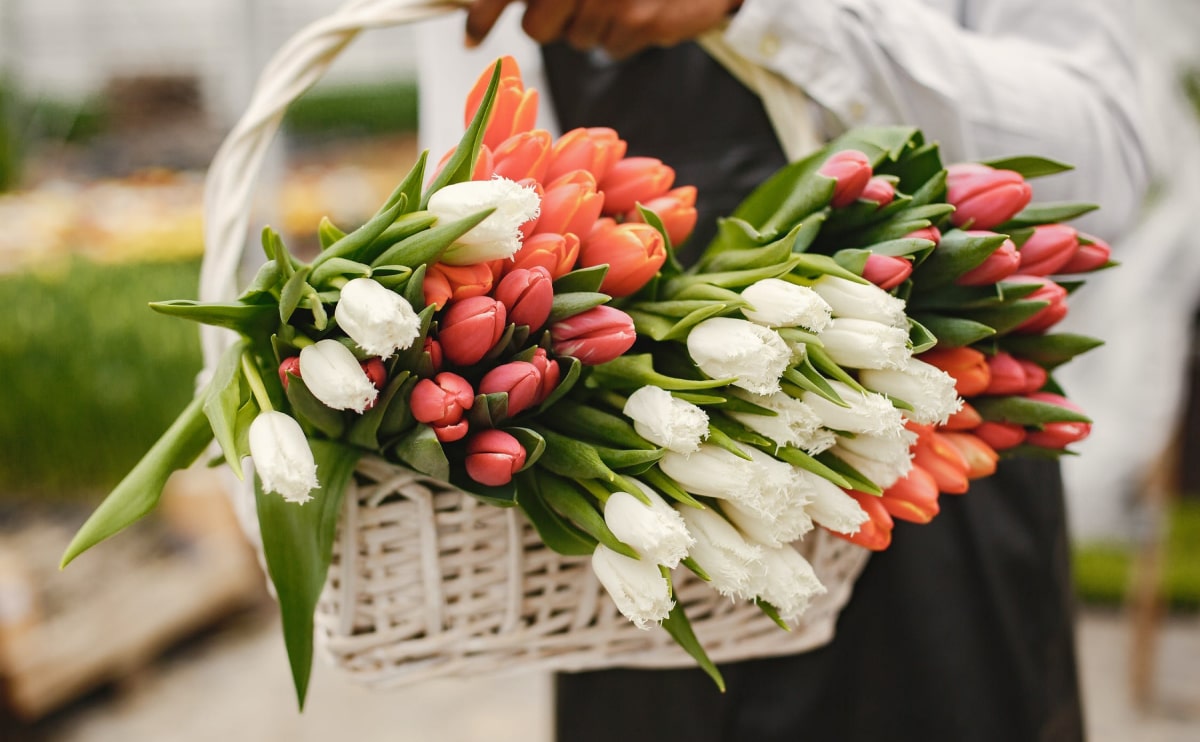
Tulips in April vs. tulips in October. Spring tulips are abundant and cheerful. Off-season tulips take extra effort to produce, and you pay for it.
Dahlias in September vs. dahlias in January. Fall dahlias are full, colourful, and reasonably priced. Winter dahlias barely exist locally.
Sunflowers in August vs. sunflowers in winter. Summer sunflowers are bright and sturdy. Winter ones are usually flown in and cost more for less impact.
If your heart is set on a particular flower, we will always do our best to find it. But if you are flexible, choosing what is in season is the easiest way to get beautiful results without overspending.
How to Make Seasonal Flowers Last Even Longer
Choosing seasonal flowers gives you a head start. A few simple habits will stretch your vase life further.
- Trim the stems. Cut about 2 to 3 cm off the bottom at an angle with clean, sharp scissors. This opens fresh tissue for drinking.
- Use a clean vase. Bacteria are the enemy of cut flowers. Wash the vase with warm soapy water before you start.
- Remove lower leaves. Any foliage below the waterline will rot and cloud the water.
- Add flower food. The packet that comes with your bouquet feeds the blooms and slows bacteria growth.
- Change the water every two days. Re-trim the stems a little each time.
- Keep them cool. Place your bouquet away from direct sun, heating vents, and ripening fruit. Ripening fruit gives off ethylene gas, which ages flowers faster.
- Pick off fading blooms. One tired flower can speed up the ones around it.
Follow these steps and most seasonal arrangements will look good for a week or more, and many hardy varieties will go longer.
Seasonal Flowers for Every Occasion
A common worry is that seasonal means limited. In reality, there is a seasonal option for almost every moment.
Weddings and events. Seasonal blooms let couples get a full, abundant look without the cost of rare imports. A June wedding with peonies and garden roses, or an October one with dahlias and rich foliage, can look luxurious on a sensible budget.
Birthdays and anniversaries. A mixed seasonal bouquet feels personal and thoughtful, and it often looks more natural and relaxed than a standard supermarket arrangement.
Sympathy and funerals. Seasonal flowers can be soft, calming, and respectful. Lilies, white roses, and fresh greenery work in nearly every season.
Corporate and office flowers. Businesses across Toronto, Markham, and Richmond Hill often choose weekly or monthly seasonal arrangements. They stay fresh longer, which means fewer replacements and lower ongoing costs.
Holidays. Valentine’s Day and Mother’s Day are peak demand periods, so prices rise. Ordering early and choosing seasonal alternatives alongside classics can help you stay within budget.
The Environmental Bonus
Seasonal flowers are also kinder to the planet. Shorter travel distances mean fewer transport emissions. Less reliance on heated greenhouses means lower energy use. And supporting regional growers helps keep farmland productive and local jobs steady.
If sustainability matters to you, choosing seasonal and local is one of the simplest changes you can make when buying flowers.
What to Look for When Buying Seasonal Flowers
Whether you shop with us or elsewhere, a few tips will help you pick well:
- Ask what is in season. A good florist will happily tell you what is looking best this week.
- Check the petals and leaves. Petals should be firm and colourful, and leaves should be green, not yellow or slimy.
- Look at the stems. They should be firm and clean, not soft or discoloured.
- Choose buds over fully open blooms if you want the longest display, since buds will open at home.
- Be flexible with colours and varieties. Let the season guide the palette. You will often end up with something prettier than you planned.
Why Choose Laris Florist for Seasonal Flowers in the GTA
At Laris Florist, we design around what is freshest, not what is easiest to stock. Our team creates hand-tied bouquets, gift arrangements, wedding florals, and event designs for customers in Toronto, Newmarket, Richmond Hill, Markham, and across the Greater Toronto Area.
When you order from us, you can expect:
- Fresh, in-season blooms chosen for beauty and longevity
- Hand-crafted arrangements made by real florists, not assembled on a conveyor belt
- Fair, transparent pricing that reflects the season
- Reliable local delivery across the GTA
- Honest advice on what will look best and last longest for your date and budget
Whether you need a last-minute birthday gift in Newmarket, a sympathy arrangement in Markham, or a full wedding design in Toronto, we will help you find the right seasonal flowers for the moment.
Frequently Asked Questions
Do seasonal flowers really last longer than out-of-season flowers?
Usually, yes. Seasonal flowers travel shorter distances, spend less time in storage, and are grown in their natural conditions, so they typically arrive fresher and have more vase life left.
Why are seasonal flowers cheaper?
Supply is higher during a flower’s natural season, and growers do not need expensive heating, lighting, or long-distance shipping. Those savings are passed on to you.
What flowers are in season in Ontario right now?
It depends on the month. Spring brings tulips and daffodils, summer brings peonies and sunflowers, fall brings dahlias and chrysanthemums, and winter brings amaryllis and evergreens. Contact Laris Florist for what is looking best this week.
Can I still get roses or lilies all year?
Yes. Some flowers are available year-round, though they are often imported. We will always tell you what is freshest and best value at the time of your order.
How long should a seasonal bouquet last?
With proper care, most seasonal bouquets last 7 to 10 days, and some hardy varieties last longer.
Does Laris Florist deliver outside Toronto?
Yes. We deliver to Toronto, Newmarket, Richmond Hill, Markham, and surrounding GTA communities.
Final Thoughts
Seasonal flowers are not a compromise. They are often the best choice: fresher, stronger, more fragrant, and kinder to your wallet. When you let the calendar guide your bouquet, you get flowers at their peak, and they repay you with days of extra beauty.
Ready to brighten your home, celebrate someone special, or plan your next event? Visit Laris Florist or order online today and let us design something fresh, seasonal, and made just for you across Toronto, Newmarket, Richmond Hill, Markham, and the GTA.